
How to build HVAC install options techs can actually sell
HVAC install options that sell are built before the truck rolls, not assembled in a driveway. They start from the AHRI matchup, so the equipment is actually rated to go together. They are tiered good to premium-plus, with each tier answering a different question the homeowner is asking. And they live in the pricebook as ready-to-present proposals, so the tech presents three clear systems in two taps instead of building a quote from scratch. That is also the ceiling on what an AI agent can do for you, since ServiceTitan Max presents from the book you built.
This guide walks the whole thing the way we build it for shops. By the end you can build options off a real AHRI matchup, tier them around the questions a homeowner actually asks, and present them in two taps with the margin holding.
The 45-minute driveway problem
Here is the scene every owner knows. The tech finishes the diagnosis, the customer is standing right there, and the tech opens ServiceTitan and starts building: hunting for the right condenser, guessing at the coil, trying to remember which furnace matches. Twenty minutes in, the customer’s patience is gone, so the tech picks the wrong item, makes one up, or knocks the price down to close the gap. Every one of those bleeds margin on a job you already won.
Most owners read that as a sales problem and buy a sales course. It is a pricebook problem. Many of your best techs are the quiet ones who do flawless work and would rather not pitch, and even your strongest closer leaks money when the book makes him assemble a quote under pressure. The job in the driveway is presenting, not configuring. When the options below are pre-built, the 45-minute estimate takes about 5, and it is the same quote whether your best tech or your newest one is standing there.
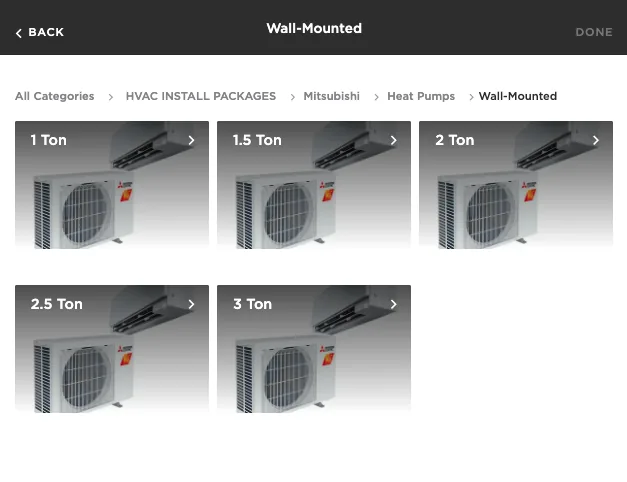 What the tech should see in the driveway: options already built, not a blank quote.
Start from the AHRI matchup
Every HVAC install option begins with the matchup: the coil, condenser, and furnace or air handler that are rated as a system, identified by an AHRI certificate number. Build the option off a real matchup and the tech never guesses a pairing in front of a customer. Build it off a guess and you risk a system that does not perform, will not pass, or cannot be warrantied.
If the AHRI number is new to you, start with how to read an AHRI matchup, then build every install package on top of one.
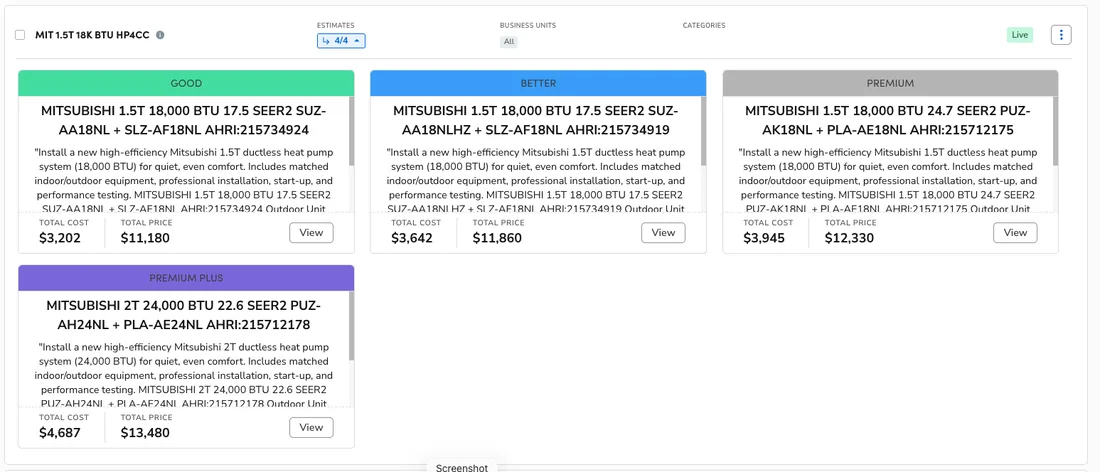 What good looks like: four AHRI-matched tiers, built and priced, ready to present.
Build the tiers around questions, not prices
The mistake almost everyone makes is building one system and then “better” and “best” versions that just cost more for upgrades the customer does not understand. The homeowner sees cheap, medium, expensive, and picks cheap. The fix is to make each tier answer a different question they are already asking:
- Good answers “will this fix it and meet code?” A solid, reliable system with a real warranty.
- Better answers “what is it like to live with?” Higher efficiency, quieter, more comfort, longer coverage.
- Best answers “what if I want the best for the long haul?” Top efficiency, smart controls, the longest warranty.
Now the homeowner is not comparing three prices, they are choosing how far up their own priorities to go. That is the whole idea in good, better, best: each tier answers a different question.
Four tiers on the big installs
On a full system replacement, three tiers leave money and the right-fit system on the table, so we build four: good, better, premium, and premium-plus. The premium-plus tier is for the long-haul buyer who wants the best the house can take, and it exists so the customer who would have said yes to more is actually offered more.
The rule does not change with the fourth tier: if it does not answer its own question, it is just a bigger number.
Put the AHRI number on the proposal
A small thing that does real work: the AHRI certificate number belongs on the proposal the customer sees. It signals the system is a verified, rated match, not a tech’s guess, and it is the document a permit office or a future buyer can check. A proposal with the matchup on it closes more confidently than a bare price. The same goes for what the price includes: show included items on a ServiceTitan estimate.
Why this has to live in the pricebook
You cannot expect a tech to build any of this on a tailgate with a customer waiting. The matchups, the four tiers, the language that explains each one, all of it gets built once, in the office, calmly, and dropped into the pricebook as ready-to-present options.
That is The Present-Don’t-Configure Method™, and it is what turns a 45-minute driveway quote into a 5-minute presentation (see above). The same options, whether your best tech or your newest one is standing there. Manufacturer co-op money belongs in the same place: co-op dollars belong in the pricebook.
Price it so the margin holds
Install options that sell still have to hold margin between the quote and the install. Tie each option’s price to live equipment and material costs, not a frozen markup, so an equipment increase shows up in the quote automatically instead of getting eaten (should you turn on dynamic pricing walks the formula). Otherwise you sell the option beautifully and lose the margin you sold.
Where to start
If your install options today are one system at a few prices, building them into AHRI-matched, tiered, proposal-ready options is exactly what a ServiceTitan pricebook build does, and what a pricebook built for HVAC shops is centered on.
See where your current book stands first with the free Pricebook Health Audit, and read the complete guide to a ServiceTitan pricebook that sells for how the whole book fits together.
Common questions
How do you build HVAC install options that sell?
Start every option from a real AHRI matchup, tier the options around the questions a homeowner is asking (will it fix it and meet code, what is it like to live with, what is the best for the long haul), and put them in the pricebook as ready-to-present proposals a tech shows in two taps.
Why do my techs take so long to build estimates in ServiceTitan?
Because the pricebook makes them build the quote from scratch on site: hunting for the condenser, guessing the coil, remembering which furnace matches. That is a pricebook problem, not a sales problem. Pre-built, AHRI-matched options turn a 45-minute estimate into about 5 minutes.
Do my techs need sales training to close more?
Usually not. Even your strongest closer leaks money when the book makes him assemble a quote under pressure, and many of your best techs are quiet ones who would rather not pitch. The fix is a book that presents for them.
How many tiers should an HVAC install have?
Good, better and best on most jobs. On full system replacements we build four: good, better, premium and premium-plus, so the customer who would say yes to more is offered more. Every tier has to answer its own question or it is just a bigger number.
Should the AHRI number be on the HVAC proposal?
Yes. It shows the system is a verified, rated match rather than a guess, and it is the document a permit office, a rebate program or a future buyer can check.