
AHRI matchups, explained for owners

An AHRI matchup is a certified combination of HVAC components, typically the outdoor unit, the indoor coil, and the furnace or air handler, that has been tested together and given an AHRI Certified Reference Number with the efficiency ratings that exact combination achieved. Not the condenser’s rating alone. The combination’s. That distinction is where owners win or lose money, so here’s how to read one.
Why the combination is the product
The SEER2 number on the condenser brochure is a promise about a system, not a part. Pair that condenser with the wrong coil and the real-world efficiency and capacity drop below what you sold, the rebate application can bounce, and the registration gets awkward. The certified matchup is the only version of that system where the rated numbers are actually backed by testing.
So when a tech quotes “the 3-ton unit” without the matchup behind it, the customer isn’t buying a tested system.
They’re buying a guess with a brand name on it.
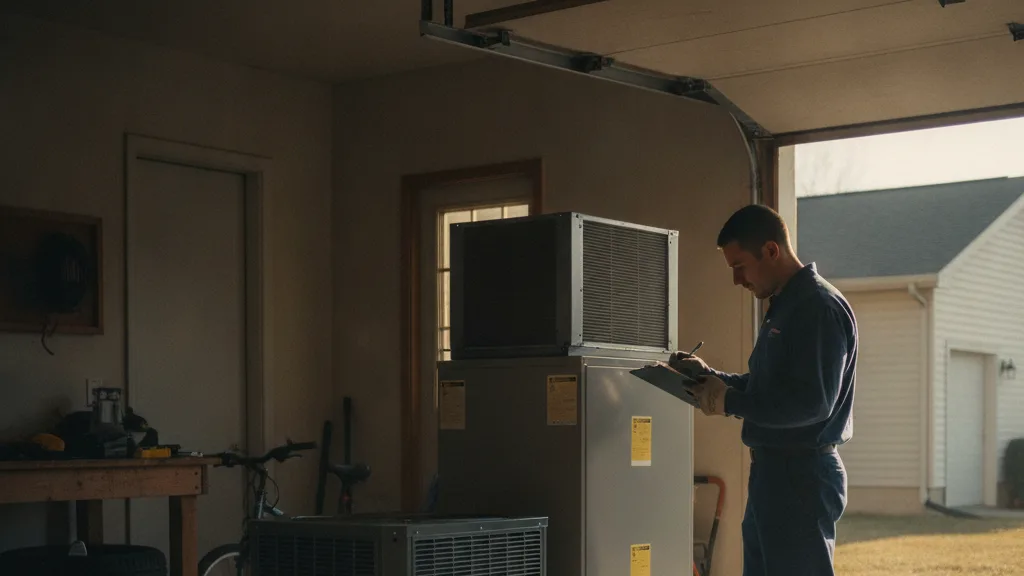 The product isn’t the condenser. It’s the set that was tested together.
How to read the certificate
Every certified combination resolves to one page with the same anatomy:
Reading it takes thirty seconds. Look up the outdoor unit’s model number at ahridirectory.org, confirm the coil and furnace listed are the exact models going into the home, and read the ratings off the certificate instead of the brochure. Since 2023 the cooling ratings are SEER2 and EER2 (the updated test standard), heat pumps add HSPF2, and furnaces carry AFUE.
If the combination you planned to install isn’t in the directory, that’s not paperwork trouble. That’s the system telling you it was never tested together.
Why the number belongs on every proposal
A proposal line that carries the AHRI Certified Reference Number says: this exact system, tested as a system, rated as a system, and you can check us. That single line does the trust-building a tech would otherwise have to do with talk.
It also future-proofs the job: when the utility rebate form or the registration asks for the number, it’s already on the customer’s paperwork.
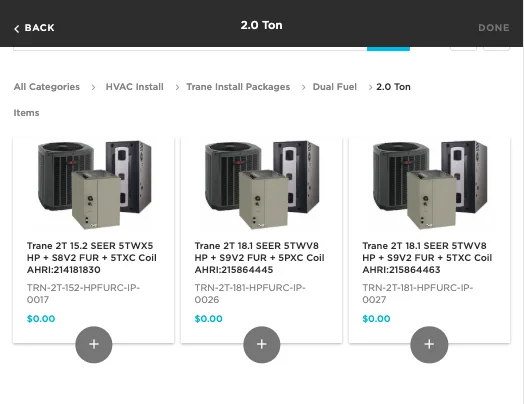 Install options built from certified matchups, coded and priced in the book before the truck rolls.
Matchups are how install options stay honest
This is where the certificate stops being compliance and starts being sales. Your install options, all four tiers of them on HVAC, should each be a certified matchup packaged with its price, not a parts list a tech assembles in a driveway.
Build them once in the office: matchup verified, reference number attached, tiers priced. Then the tech’s job is presenting tested systems, which is the core of The Present-Don’t-Configure Method™.
The owners who skip this run options that are really just price ladders, and a tier that doesn’t answer its own question doesn’t sell. A tier built on a certified matchup answers the question with a number anyone can verify.
FAQ
How do I add an AHRI matchup to an install proposal?
- Look up the combination at ahridirectory.org by the outdoor unit’s model number.
- Confirm the coil and furnace or air handler on the certificate match what you’ll actually install.
- Copy the AHRI Certified Reference Number and the certified ratings onto that option’s proposal line.
- Save the combination in your pricebook as a packaged install option, so the matchup prints on every future proposal without anyone retyping it.
What does the reference number tell you? One tested combination: specific outdoor unit, coil, and furnace or air handler, with the ratings that combination achieved in certified testing. Change any component and the number no longer applies.
Do rebates require the certificate? Very often, yes. Utility programs commonly ask for the reference number to prove the installed system meets the rated efficiency, and many registrations and some permit offices want it too. If it’s on the proposal, the homeowner never has to chase it.
Built into the book, not bolted on
We build install options this way as standard practice: every tier in the book is a verified matchup with its reference number, its real equipment cost, and its price already attached. That’s part of every pricebook build we do, and it’s the difference between a book that holds up when a homeowner checks the number and one that hopes nobody asks.